Showing posts with label television. Show all posts

Saturday, 21 May 2011

Great Compare of the World

Moin Akhtar (Urdu: معین اختر, also spelled as, Moeen Akhtar; 24 December 1950 – 22 April 2011) was a Pakistani television, film and stage actor, as well as a comedian, impersonator, and a host. He was also a play writer, singer, film director and a producer.

Akhtar was born in Karachi to Urdu speaking parents migrated from Mumbai India , was highly dynamic and versatile performer, he made his debut for television on 6 September 1966, in a variety show held on PTV to celebrate the first defense day of Pakistan‎. Since then, he has performed several roles in TV plays/shows, later making a team with Anwar Maqsood and Bushra Ansari.

He was beloved for providing humor for people of all ages, and with an etiquette that remains unmatched. His attempts to avoid vulgarity in his humor rendered him a favorite amongst family audiences. Akhtar was fluent in several languages, including English, Bengali, Sindhi, Punjabi, Memon, Pashto, Gujarati and Urdu. He performed not only in Pakistan but played in several stage shows like Bakra Qiston Pe and Buddha Ghar Pe Hai with Umer Sharif in India too.

Moin Akhtar rose to the national spotlight and gathered critical acclaim for his performance in the drama Rosy /Rozy (روذی), in which he played the role of a female TV artist. Rozy was an Urdu adaptation of Hollywood movie Tootsie starring Dustin Hoffman. Moreover, in a talk-show namely Loose Talk, which began in 2005 on ARY Digital, he appeared as a different character in each and every of over 400 episodes interviewed by Anwar Maqsood, the writer and the host of the program. Akhter also briefly hosted the game show Kya Aap Banaingay Crorepati?, the Pakistani version of Who Wants to be a Millionaire?.

He was awarded honorary citizenship of Dallas in 1996 for his achievements. He is also listed among Amazing Pakistanis of all time

Selected television serials

  • Rozi
  • Dollar Man
  • Makaan No 47
  • Half Plate
  • Family-93
  • Eid Train
  • Bandar Road Se Keamari
  • Such Much
  • Aangan Tehra
  • Baby
  • Rafta Rafta

Host

He was the host of the show in which

  • King Husain of Jordan was invited.
  • The Prime minister of Gambia, Dawoodi-Al-Joza, was invited.
  • President Zia-ul-Haq was invited.
  • Prime Minister Zulfiqar Ali Bhutto was invited.
  • President General Yahya Khan was invited.
  • President Ghulam Ishaq Khan was invited.
  • President Pervez Musharaf was invited and he mimicked the president in his presence.
  • Moin Akhter Show
  • Lagay raho Moin Bhai

Television shows

  • Fifty Fifty (comedy serial from PTV)
  • Show Sha
  • Showtime
  • Studio Dhhaai (Studio 2.5)
  • Studio Pone Teen (Studio 2.75)
  • Loose Talk (From ARY Digital)

Songs and albums

Album - Tera Dil Bhi Yun Hi Tadpe
  • "Chhorr Ke Jaane Wale"
  • "Choat Jigar Pe Khai Hai"
  • "Ro-Ro Ke De Raha Hai"
  • "Tera Dil Bhi Yun Hi Tadpe"
  • "Dard Hi Sirf Dil Ko Mila"
  • "Dil Ro Raha Hai"
  • "Hoten Hai Bewafa"

Death

He died on 22 April 2011 at about 6:15pm in Karachi after suffering from a heart attack. He is survived by his wife, three daughters and two sons. The funeral prayers of Moin Akhtar were offered in Tauheed Mosque near his residence. Thousands of people attended the funeral prayer which was led by Junaid Jamshed

Sunday, 8 May 2011

History of Newspaper

A newspaper is a regularly scheduled publication containing news of current events, informative articles, diverse features and advertising. It usually is printed on relatively inexpensive, low-grade paper such as newsprint. By 2007, there were 6580 daily newspapers in the world selling 395 million copies a day. The worldwide recession of 2008, combined with the rapid growth of web-based alternatives, caused a serious decline in advertising and circulation, as many papers closed or sharply retrenched operations.

General-interest newspapers typically publish stories on local and national political events and personalities, crime, business, entertainment, society and sports. Most traditional papers also feature an editorial page containing editorials written by an editor and columns that express the personal opinions of writers. The newspaper is typically funded by paid subscriptions and advertising.

A wide variety of material has been published in newspapers, including editorial opinions, criticism, persuasion and op-eds; obituaries; entertainment features such as crosswords, sudoku and horoscopes; weather news and forecasts; advice, food and other columns; reviews of movies, plays and restaurants; classified ads; display ads, television listings, inserts from local merchants, editorial cartoons and comic strips.

Definition

Newspapers typically meet four criteria:

  • Publicity: Its contents are reasonably accessible to the public.
  • Periodicity: It is published at regular intervals.
  • Currency: Its information is up to date.
  • Universality: It covers a range of topics

Gazettes and bulletins

Before the invention of newspapers in the early 17th century, official government bulletins were circulated at times in some centralized empires.

In Ancient Rome, Acta Diurna, or government announcement bulletins, were made public by Julius Caesar. They were carved in metal or stone and posted in public places.

In China, early government-produced news sheets, called tipao, circulated among court officials during the late Han dynasty (second and third centuries AD). Between 713 and 734, the Kaiyuan Za Bao ("Bulletin of the Court") of the Chinese Tang Dynasty published government news; it was handwritten on silk and read by government officials. In 1582, there was the first reference to privately published newssheets in Beijing, during the late Ming Dynasty;

In Early modern Europe the increased cross-border interaction created a rising need for information which was met by concise handwritten newssheets. In 1556, the government of Venice first published the monthly Notizie scritte, which cost one gazetta. These avvisi were handwritten newsletters and used to convey political, military, and economic news quickly and efficiently to Italian cities (1500–1700) — sharing some characteristics of newspapers though usually not considered true newspapers.

However, none of these publications fully met the classical criteria for proper newspapers, as they were typically not intended for the general public and restricted to a certain range of topics.

Newspapers

Europe

Title page of Carolus' Relation from 1609, the earliest newspaper

The emergence of the new media branch in the 17th century has to be seen in close connection with the spread of the printing press from which the publishing press derives its name.

The German-language Relation aller Fürnemmen und gedenckwürdigen Historien, printed from 1605 onwards by Johann Carolus in Strasbourg, is often recognized as the first newspaper.[8][9] At the time, Strasbourg was a free imperial city in the Holy Roman Empire of the German Nation; the first newspaper of modern Germany was the Avisa, published in 1609 in Wolfenbüttel.

Other early papers include:

The Dutch Courante uyt Italien, Duytslandt, &c. of 1618 was the first to appear in folio- rather than quarto-size. Amsterdam, a center of world trade, quickly became home to newspapers in many languages, often before they were published in their own country.

The first English-language newspaper, Corrant out of Italy, Germany, etc., was published in Amsterdam in 1620. A year and a half later, Corante, or weekely newes from Italy, Germany, Hungary, Poland, Bohemia, France and the Low Countreys. was published in England by an "N.B." (generally thought to be either Nathaniel Butter or Nicholas Bourne) and Thomas Archer.

The first newspaper in France was published in 1631, La Gazette (originally published as Gazette de France).

The first newspaper in Portugal, Gazeta, was published in 1641 in Lisbon. The first Spanish newspaper, Gaceta de Madrid, was published in 1661.

Post- och Inrikes Tidningar (founded as Ordinari Post Tijdender) was first published in Sweden in 1645, and is the oldest newspaper still in existence, though it now publishes solely online.

Opregte Haarlemsche Courant from Haarlem, first published in 1656, is the oldest paper still printed. It was forced to merge with the newspaper Haarlems Dagblad in 1942 when Germany occupied the Netherlands. Since then the Haarlems Dagblad appears with the subtitle Oprechte Haerlemse Courant 1656 and considers itself to be the oldest newspaper still publishing.

Merkuriusz Polski Ordynaryjny was published in Kraków, Poland in 1661.

The first successful English daily, The Daily Courant, was published from 1702 to 1735.

North America

Untitled watercolor of a man studying a newspaper, about 1863, by Henry Louis Stephens. The paper's headline reports the Emancipation Proclamation.
Front page of The New York Times on Armistice Day, November 11, 1918.

In Boston in 1690, Benjamin Harris published Publick Occurrences Both Forreign and Domestick. This is considered the first newspaper in the American colonies even though only one edition was published before the paper was suppressed by the government. In 1704, the governor allowed The Boston News-Letter to be published and it became the first continuously published newspaper in the colonies. Soon after, weekly papers began publishing in New York and Philadelphia. These early newspapers followed the British format and were usually four pages long. They mostly carried news from Britain and content depended on the editor’s interests. In 1783, the Pennsylvania Evening Post became the first American daily.

In 1752, John Bushell published the Halifax Gazette, the first Canadian newspaper.

By 2007, there were 1,456 daily newspapers in the U.S., selling 55 million copies a day.

Industrial Revolution

By the early 19th century, many cities in Europe, as well as North and South America, published newspaper-type publications though not all of them developed in the same way; content was vastly shaped by regional and cultural preferences. Advances in printing technology related to the Industrial Revolution enabled newspapers to become an even more widely circulated means of communication. In 1814, The Times (London) acquired a printing press capable of making 1,100 impressions per minute.

Soon, it was adapted to print on both sides of a page at once. This innovation made newspapers cheaper and thus available to a larger part of the population. In 1830, the first penny press newspaper came to the market: Lynde M. Walter's Boston Transcript. Penny press papers cost about one sixth the price of other newspapers and appealed to a wider audience. In France, Émile de Girardin started "La Presse" in 1836, introducing cheap, advertising-supported dailies to France. In 1848, August Zang, an Austrian who knew Girardin in Paris, returned to Vienna to introduce the same methods with "Die Presse" (which was named for and frankly copied Girardin's publication).

Impact of television and Internet

By the late 1990s the availability of news via 24-hour television channels and then the Internet posed an ongoing challenge to the business model of most newspapers in developed countries. Paid circulation has declined, while advertising revenue — which makes up the bulk of most newspapers’ income — has been shifting from print to the new media, resulting in a general decline in profits. Many newspapers around the world launched online editions in an attempt to follow or stay ahead of their audience.

However, in the rest of the world, cheaper printing and distribution, increased literacy, the growing middle class and other factors have more than compensated for the emergence of electronic media and newspapers continue to grow.

On April 10, 1995, The American Reporter became the first daily newspaper, with its own paid reporters around the world and all-original content, to start on the Internet. The editor-in-chief and founder is Joe Shea. The site is owned by 400 journalists.

Categories

While most newspapers are aimed at a broad spectrum of readers, usually geographically defined, some focus on groups of readers defined more by their interests than their location: for example, there are daily and weekly business newspapers and sports newspapers. More specialist still are some weekly newspapers, usually free and distributed within limited areas; these may serve communities as specific as certain immigrant populations, or the local gay community.

Daily

Israeli daily newspaper Haaretz, seen in its Hebrew and English editions

A daily newspaper is issued every day, sometimes with the exception of Sundays and some national holidays. Saturday and, where they exist, Sunday editions of daily newspapers tend to be larger, include more specialized sections and advertising inserts, and cost more. Typically, the majority of these newspapers’ staff work Monday to Friday, so the Sunday and Monday editions largely depend on content done in advance or content that is syndicated. Most daily newspapers are published in the morning. Afternoon or evening papers are aimed more at commuters and office workers.

Weekly

Weekly newspapers are common and tend to be smaller than daily papers. In some cases, there also are newspapers that are published twice or three times a week. In the United States, such newspapers are generally still classified as weeklies.

National

Most nations have at least one newspaper that circulates throughout the whole country: a national newspaper, as contrasted with a local newspaper serving a city or region. In the United Kingdom, there are numerous national newspapers, including The Independent, The Times, The Daily Telegraph, The Guardian, The Observer, The Daily Mail, The Sun, The Daily Express and The Daily Mirror. In the United States and Canada, there are few national newspapers. Almost every market has one or two newspapers that dominate the area. Certain newspapers, notably The New York Times, The Wall Street Journal and USA Today in the US, and The Globe and Mail and The National Post in Canada are available throughout the country. In India, newspapers like the Times of India, The Hindu, and the Hindustan Times are extremely popular and have large reader bases. Large metropolitan newspapers have also expanded distribution networks and with effort can be found outside their normal area.

Reading the newspaper: Brookgreen Gardens in Pawleys Island, South Carolina, United States.

International

There is also a small group of newspapers which may be characterized as international newspapers. Some, such as The International Herald Tribune, have always had that focus, while others are repackaged national newspapers or "international editions" of national-scale or large metropolitan newspapers. Often these international editions are scaled down to remove articles that might not interest the wider range of readers.

As English became the international language of business and technology, many newspapers formerly published only in non-English languages have also developed English-language editions. In places as varied as Jerusalem and Mumbai, newspapers are printed to a local and international English-speaking public. The advent of the Internet has also allowed the non-English newspapers to put out a scaled-down English version to give their newspaper a global outreach.

Online

Diario de Pernambuco, founded in 1825 is the first newspaper in all South America.

Virtually all printed newspapers have online editions, which depending on the country may be regulated by journalism organizations such as the Press Complaints Commission in the UK.[24] But as some publishers find their print-based models increasingly unsustainable, Web-based "newspapers" have also started to appear, such as the Southport Reporter in the UK and the Seattle Post-Intelligencer,[25] which stopped publishing in print after 149 years in March 2009 and went online only.

Customized

A new trend in newspaper publishing is the introduction of individualization through on-demand printing technologies. Customized newspapers allow the reader to create their individual newspaper through the selection of individual pages from multiple publications. This "Best of" approach allows to revive the print-based model and openes up a new distribution channel to increase coverage beneath the usual boundaries of distribution. Customized newspapers online have been offered by MyYahoo. I-Google, CRAYON, ICurrent.com, Kibboko.com, Twitter.times and many others.

Organization and personnel

Newsboy, Iowa City, 1940, Arthur Rothstein.

In the United States, the overall manager or chief executive of the newspaper is the publisher. In small newspapers, the owner of the publication (or the largest shareholder in the corporation that owns the publication) is usually the publisher. Although he or she rarely or perhaps never writes stories, the publisher is legally responsible for the contents of the entire newspaper and also runs the business, including hiring editors, reporters, and other staff members. This title is less common outside the U.S. The equivalent position in the film industry and television news shows is the executive producer.

Most newspapers have four main departments devoted to publishing the newspaper itself—editorial, production/printing, circulation, and advertising, although they are frequently referred to by a variety of other names—as well as the non-newspaper-specific departments also found in other businesses of comparable size, such as accounting, marketing, human resources, and IT.

Throughout the English-speaking world, the person who selects the content for the newspaper is usually referred to as the editor. Variations on this title such as editor-in-chief, executive editor, and so on are common. For small newspapers, a single editor may be responsible for all content areas. At large newspapers, the most senior editor is in overall charge of the publication, while less senior editors may each focus on one subject area, such as local news or sports. These divisions are called news bureaus or "desks", and each is supervised by a designated editor. Most newspaper editors copy edit the stories for their part of the newspaper, but they may share their workload with proofreaders and fact-checkers.

Reporters are journalists who primarily report facts that they have gathered. Reporters writing longer, less news-oriented articles may be called feature writers. Photographers and graphic artists provide images and illustrations to support articles. Journalists often specialize in a subject area, called a beat, such as sports, religion, or science. Columnists are journalists who write regular articles recounting their personal opinions and experiences.

Printers and press operators physically print the newspaper. Printing is outsourced by many newspapers, partly because of the cost of an offset web press (the most common kind of press used to print newspapers) and also because a small newspaper's print run might require less than an hour of operation, meaning that if the newspaper had its own press it would sit idle most of the time. If the newspaper offers information online, webmasters and web designers may be employed to upload stories to the newspaper's website.

The staff of the circulation department liaise with retailers who sell the newspaper; sell subscriptions; and supervise distribution of the printed newspapers through the mail, by newspaper carriers, at retailers, and through vending machines. Free newspapers do not sell subscriptions, but they still have a circulation department responsible for distributing the newspapers.

Sales staff in the advertising department not only sell space to clients such as local businesses, but also help advertisers design and plan their advertising campaigns. Other members of the advertising department may include graphic designers, who design ads according to the customers' specifications and the department's policies. In an advertising-free newspaper, there is no advertising department

Tuesday, 29 March 2011

King of Bollywood

Shahrukh Khan (Urdu: شاہ رُخ خان, Hindi: शाहरुख़ ख़ान; born 2 November 1965), often credited as Shah Rukh Khan, is an Indian film actor and a prominent Bollywood figure, as well as a film producer and television host. Khan began his career appearing in several television serials in the late 1980s. He made his film debut in Deewana (1992). Since then, he has been part of numerous commercially successful films and has earned critical acclaim for many of his performances. Khan has won fourteen Filmfare Awards for his work in Indian films, eight of which are in the Best Actor category (a record). In 2005, the Government of India honoured him with the Padma Shri for his contributions towards Indian Cinema.

Khan's films such as Dilwale Dulhaniya Le Jayenge (1995), Kuch Kuch Hota Hai (1998), Chak De India (2007), Om Shanti Om (2007) and Rab Ne Bana Di Jodi (2008) remain some of Bollywood's biggest hits, while films like Kabhi Khushi Kabhie Gham (2001), Kal Ho Naa Ho (2003), Veer-Zaara (2004), Kabhi Alvida Naa Kehna (2006) and My Name Is Khan (2010) have been top-grossing Indian productions in the overseas markets, making him one of the most successful actors of India. Since 2000, Khan branched out into film production and television presenting as well. He is the founder/owner of two production companies, Dreamz Unlimited and Red Chillies Entertainment. Khan is today considered to be the world's biggest movie star,with a fan following numbering in the billions and a net worth estimated at over Rs 2500 crore (US$ 540 million). In 2008, Newsweek named him one of the 50 most powerful people in the world.

Biography

Shah Rukh Khan attended the elite St. Columba's School in New Delhi where he won the school's highest accolade, The Sword of Honour.

Khan was born in 1965 to Muslim[6] parents of Pathan descent in New Delhi, India.[7] His father, Taj Mohammed Khan, was an Indian independence activist from Peshawar, British India. According to Khan, his paternal grandfather was originally from Afghanistan.[8] His mother, Lateef Fatima, was the adopted daughter of Major General Shah Nawaz Khan of the Janjua Rajput clan, who served as a General in the Indian National Army of Subash Chandra Bose.[9] Khan's father came to New Delhi from Qissa Khawani Bazaar in Peshawar before the partition of India, while his mother's family came from Rawalpindi, British India. Khan has an elder sister named Shehnaz.

Growing up in Rajendra Nagar neighbourhood, Khan attended St. Columba's School where he was accomplished in sports, drama, and academics. He won the Sword of Honour, an annual award given to the student who best represents the spirit of the school. Khan later attended the Hansraj College (1985–1988) and earned his Bachelors degree in Economics (honors). Though he pursued a Masters Degree in Mass Communications at Jamia Millia Islamia, he later opted out to make his career in Bollywood.

After the death of his parents, Khan moved to Mumbai in 1991. In that same year, before any of his films were released, he married Gauri Chibber, a Hindu, in a traditional Hindu wedding ceremony on 25 October 1991. They have two children, son Aryan (b. 1997) and daughter Suhana (b. 2000). According to Khan, while he strongly believes in Allah, he also values his wife's religion. At home, his children follow both religions, with the Qur'an being situated next to the Hindu deities.

In 2005, Nasreen Munni Kabir produced a two-part documentary on Khan, titled The Inner and Outer World of Shah Rukh Khan. Featuring his 2004 Temptations concert tour, the film contrasted Khan's inner world of family and daily life with the outer world of his work. The book Still Reading Khan, which details his family life, was released in 2006. Another book by Anupama Chopra, King of Bollywood: Shahrukh Khan and the seductive world of Indian cinema, was released in 2007. It describes the world of Bollywood through Khan's life.

Film career

Background

Khan studied acting under celebrated Theatre Director Barry John at Delhi's Theatre Action Group (TAG). In 2007, John commented thus on his former pupil that, "The credit for the phenomenally successful development and management of Shahrukh's career goes to the superstar himself." Khan made his acting debut in 1988 when he appeared in the television series, Fauji, playing the role of Commando Abhimanyu Rai. He went on to appear in several other television serials, most notably in the 1989 serial, Aziz Mirza's Circus, which depicted the life of circus performers. The same year, Khan also had a minor role in the made-for-television English-language film, In Which Annie Gives it Those Ones, which was based on life at Delhi University and was written by Arundhati Roy. When Khan appeared in those teleserials, people found in him some resemblance with legendary actor Dilip Kumar and also compared his acting style with the thespian.

1990s

Upon moving from New Delhi to Mumbai in 1991, Khan made his Bollywood movie debut in Deewana (1992). The movie became a box office hit, and launched his career in Bollywood. His performance won him a Filmfare Best Male Debut Award. He went on to star in Maya Memsaab, which generated some controversy because of his appearance in an "explicit" sex scene in the movie.

In 1993, Khan won acclaim for his performances in villainous roles as an obsessive lover and a murderer, respectively, in the box office hits, Darr and Baazigar. In Khan's entry in Encyclopedia Britannica's "Encyclopedia of Hindi Cinema" it was stated that "he defied the image of the conventional hero in both these films and created his own version of the revisionist hero."[ Darr marked his first collaboration with renowned film-maker Yash Chopra and his banner Yash Raj Films, the largest production company in Bollywood. Baazigar, which saw Khan portraying an ambiguous avenger who murders his girlfriend, shocked its Indian audience with an unexpected violation of the standard Bollywood formula. His performance won him his first Filmfare Best Actor Award. In that same year, Khan played the role of a young musician in Kundan Shah's Kabhi Haan Kabhi Naa, a performance that earned him a Filmfare Critics Award for Best Performance. Khan maintains that this is his all-time favourite among the movies he has acted in. In 1994, Khan once again played an obsessive lover/psycho's role in Anjaam, co-starring alongside Madhuri Dixit. Though the movie was not a box office success, Khan's performance earned him the Filmfare Best Villain Award.

In 1995, Khan starred in the two biggest hits of the year in India. His first release was Rakesh Roshan's Karan Arjun. The film, which dealt with reincarnation, became the second-highest grossing film of the year. He followed it with Aditya Chopra's directorial debut, the romance Dilwale Dulhania Le Jayenge. A major critical and commercial success, the movie became the year's top-grossing production in India. In 2007, it entered its twelfth year in Mumbai theaters. By then the movie had grossed over 12 billion rupees, making it one of India's biggest movie blockbusters. Dilwale Dulhania Le Jayenge won ten Filmfare Awards, and Khan's performance as a young NRI who falls for Kajol's character while on a college vacation, won him his second Best Actor Award. In 2005, Indiatimes Movies ranked the movie amongst the 25 Must See Bollywood Films, citing it as a "trendsetter of sorts". In that same year's retrospective review by Rediff, Raja Sen stated, "Khan gives a fabulous performance, redefining the Lover for the 1990s with great panache. He's cool and flippant, but sincere enough to appeal to the junta. The performance itself is, like the best in the business, played well enough to come across as effortless, as non-acting."

1996 was a disappointing year for Khan as all his movies released that year failed to do well at the box office. This was, however, followed by a comeback in 1997. He saw success with Subhash Ghai's social drama Pardes — one of the biggest hits of the year — and Aziz Mirza's comedy Yes Boss, a moderately successful feature. His second project with Yash Chopra as a director, Dil to Pagal Hai became that year's second highest-grossing movie, and he won his third Filmfare Best Actor Award for his role as a stage director who falls in love with one of his new actresses.

In 1998, Khan starred in Karan Johar's directorial debut, Kuch Kuch Hota Hai, which was the biggest hit of the year. His performance won him his fourth Best Actor award at the Filmfare. He won critical praise for his performance in Mani Ratnam's Dil Se. The movie did not do well at the Indian box office, though it was a commercial success overseas. Khan's only release in 1999, Baadshah, was an average grosser.

2000s

Khan at the Zee Carnival in Sun Tech City, Singapore, in 2008

Khan's success continued with Aditya Chopra's 2000 film, Mohabbatein, co-starring Amitabh Bachchan. It did well at the box office, and Khan's performance as a college teacher won him his second Critics Award for Best Performance. He also starred in Mansoor Khan's action film Josh. The film starred Khan as the leader of a Christian gang in Goa and Aishwarya Rai as his twin sister, and was also a box office success.[40] In that same year, Khan set up his own production house, Dreamz Unlimited with Juhi Chawla (see below). Both Khan and Chawla starred in the first movie of their production house, Phir Bhi Dil Hai Hindustani.[40] His work with Karan Johar continued as he collaborated on the family drama Kabhi Khushi Kabhie Gham which was the second biggest hit of the year. He also received favorable reviews for his performance as Emperor Asoka in the historical epic, Asoka, a partly fictionalised account of the life of Ashoka the Great (304 BC–232 BC).

In 2002, Khan received acclaim for playing the title role in Sanjay Leela Bhansali's award-winning period romance, Devdas. It was the third Hindi movie adaptation of Sharat Chandra Chattopadhyay's well-known novel of the same name, and surfaced as one of the biggest hits of that year.[42] Khan also starred opposite Salman Khan and Madhuri Dixit in the family-drama Hum Tumhare Hain Sanam, which did well at the box office.[42] In 2003, Khan starred in the moderately successful romantic drama, Chalte Chalte.[43] That same year, he starred in the tearjerker, Kal Ho Naa Ho, written by Karan Johar and directed by Nikhil Advani. Khan's performance in this movie as a man with a fatal heart disease was appreciated. The movie proved to be one of the year's biggest hits in India and Bollywood's biggest hit in the overseas markets.

2004 was a particularly good year for Khan, both commercially and critically. He starred in Farah Khan's directorial debut, the comedy Main Hoon Na. The movie did well at the box office. He then played the role of an Indian officer, Veer Pratap Singh in Yash Chopra's love saga Veer-Zaara, which was the biggest hit of 2004 in both India and overseas. The film relates the love story of Veer and Pakistani woman Zaara Haayat Khan, played by Preity Zinta. Khan's performance in the film won him awards at several award ceremonies. In that same year, he received critical acclaim for his performance in Ashutosh Gowariker's drama Swades. He was nominated for the Filmfare Best Actor Award for all three of his releases in 2004, winning it for Swades.

In 2006, Khan collaborated with Karan Johar for the fourth time with the melodrama movie Kabhi Alvida Na Kehna. It did well in India and much more so in the overseas market, becoming the biggest Bollywood hit in the overseas market of all-time. His second release that year saw him playing the title role in the action film Don: The Chase Begins Again, a remake of the 1978 hit Don. The movie was a success.

Khan's success continued with a few more highly popular films. One of his most successful works was the multiple award-winning 2007 film, Chak De India, about the Indian women's national hockey team. Earning over Rs 639 million, Chak De India became the third highest grossing movie of 2007 in India and won yet another Filmfare Best Actor Award for Khan. The film was a major critical success.In the same year Khan also starred in Farah Khan's 2007 film, Om Shanti Om. The film emerged as the year's highest grossing film in India and the overseas market, and became India's highest grossing production ever up to that point. It earned him another nomination for Best Actor at the Filmfare ceremony. Khan's more recent films include the 2008 release, Rab Ne Bana Di Jodi which was a huge box office success, and his only 2009 release was Billu which failed at the box office.

2010s

Khan's next film was My Name Is Khan, his fourth collaboration with director Karan Johar and the sixth movie in which he is paired with Kajol. Filming commenced in December 2008 in Los Angeles and ended in October 2009. While on one shoot in Los Angeles, along with his wife Gauri and director Karan Johar, he took a break from filming to attend the 66th Golden Globe Awards, held in Los Angeles, California, on 11 January 2009, where he was introduced as the King of Bollywood.[50] Khan introduced Slumdog Millionaire, a movie he had previously turned down, along with a star from the film, Freida Pinto. My Name Is Khan was released on 12 February 2010. Based on a true story, and set against the backdrop of perceptions on Islam post September attacks, My Name Is Khan stars Khan as Rizwan Khan, a Muslim man suffering from Asperger syndrome who sets out on a journey across America on a mission to meet the country's President and clear his name. Upon release, the film received positive reviews from critics and became the highest-grossing Bollywood film of all time in the overseas market. Khan won his eighth Filmfare Award for Best Actor for his portrayal, threby joining Dilip Kumar as the record holder in this category. He is currently filming for Anubhav Sinha's science fiction Ra.One opposite Kareena Kapoor, which is due for release on June 3, 2011.

Producer

Khan at the 2008 Berlin International Film Festival in Germany

Khan turned producer when he set up a production company called Dreamz Unlimited with Juhi Chawla and director Aziz Mirza in 1999. The first two of the films he produced and starred in: Phir Bhi Dil Hai Hindustani (2000) and Asoka (2001) were box office failures. However, his third film as a producer and star, Chalte Chalte (2003), proved a box office hit.

In 2004, Khan set up another production company, Red Chillies Entertainment, and produced and starred in Main Hoon Na, another hit. The following year, he produced and starred in the fantasy film Paheli, which did poorly. It was, however, India's official entry to the Academy Awards for consideration for Best Foreign Language Film, but it did not pass the final selection. Also in 2005, Khan co-produced the supernatural horror film Kaal with Karan Johar, and performed an item number for the film with Malaika Arora Khan. Kaal was moderately successful at the box office. His company has gone on to produce Om Shanti Om (2007), in which he starred, and Billu (2009), in which he played a supporting role as a Bollywood superstar.

Apart from film production, the company also has a visual effects studio known as Red Chillies VFX. It has also ventured into television content production, with shows like, The First Ladies, Ghar Ki Baat Hai', and Knights and Angels. Television advertisements are also produced by the company.

In 2008, Red Chillies Entertainment became the owner of the Kolkata Knight Riders in the BCCI-backed IPL cricket competition.

Television

In 2007, Khan replaced Amitabh Bachchan as the host of the third series of the popular game show Kaun Banega Crorepati, the Indian version of Who Wants to Be a Millionaire?. The previous had hosted the show for five years from 2000–05. On 22 January 2007, Kaun Banega Crorepati aired with Khan as the new host and later ended on 19 April 2007.

On 25 April 2008, Khan began hosting the game show Kya Aap Paanchvi Pass Se Tez Hain?, the Indian version of Are You Smarter Than a 5th Grader?, whose last episode was telecasted on 27 July 2008, with Lalu Prasad Yadav as the special guest.

In February 2011, he began hosting Zor Ka Jhatka, the Indian version of the American game show Wipeout, on Imagine TV.

Awards and nominations

Khan has been awarded several honours which includes the Padma Shri, India's fourth highest civilian award from the Government of India in 2005. In April 2007, a life-size wax statue of Khan was installed at Madame Tussauds Wax Museum, London. Another statue was installed at the Musée Grévin in Paris, the same year. During the same year, he was accorded the Ordre des Arts et des Lettres (Order of the Arts and Literature) award by the French government for his “exceptional career”.There are also statues in Hong Kong and New York

In October 2008, Khan was conferred the Darjah Mulia Seri Melaka which carries the honorific Datuk (in similar fashion to "Sir" in British knighthood), by the Yang di-Pertua Negeri Tun Mohd Khalil Yaakob, the head of state of Malacca in Malaysia. Khan was honoured for "promoting tourism in Malacca" by filming One Two Ka Four there in 2001. Some were critical of this decision.[65] He was also honoured with an honorary doctorate in arts and culture from Britain's University of Bedfordshire in 2009.

,

Sunday, 30 January 2011

Television Histoty


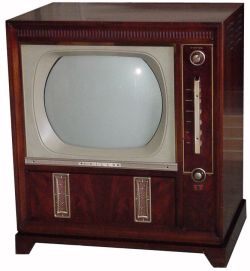
Television was not invented by a single inventor, instead many people working together and alone over the years, contributed to the evolution of television.
Overview - Timeline of Television History
Broadcasting Pioneers: The Many Innovators Behind Television HistoryAt the dawn of television history there were two distinct paths of technology experimented with by researchers.
Early inventors attempted to either build a mechanical television system based on the technology of Paul Nipkow's rotating disks; or they attempted to build an electronic television system using a cathode ray tube developed independently in 1907 by English inventor A.A. Campbell-Swinton and Russian scientist Boris Rosing.
Electronic television systems worked better and eventual replaced mechanical systems.
Paul Gottlieb Nipkow - Mechanical Television HistoryGerman, Paul Nipkow developed a rotating-disc technology to transmit pictures over wire in 1884 called the Nipkow disk. Paul Nipkow was the first person to discover television's scanning principle, in which the light intensities of small portions of an image are successively analyzed and transmitted.
John Logie Baird - MechanicalIn the 1920's, John Logie Baird patented the idea of using arrays of transparent rods to transmit images for television. Baird's 30 line images were the first demonstrations of television by reflected light rather than back-lit silhouettes. John Logie Baird based his technology on Paul Nipkow's scanning disc idea and later developments in electronics.
Charles Francis Jenkins - MechanicalCharles Jenkins invented a mechanical television system called radiovision and claimed to have transmitted the earliest moving silhouette images on June 14, 1923.
Cathode Ray Tube - Electronic Television HistoryElectronic television is based on the development of the cathode ray tube, which is the picture tube found in modern TV sets. German scientist, Karl Braun invented the cathode ray tube oscilloscope (CRT) in 1897.
Vladimir Kosma Zworykin - ElectronicRussian inventor, Vladimir Zworykin invented an improved cathode-ray tube called the kinescope in 1929. The kinescope tube was sorely needed for television. Zworykin was one of the first to demonstrate a television system with all the features of modern picture tubes.
Philo T. Farnsworth - ElectronicIn 1927, Philo Farnsworth was the first inventor to transmit a television image comprised of 60 horizontal lines. The image transmitted was a dollar sign. Farnsworth developed the dissector tube, the basis of all current electronic televisions. He filed for his first television patent in 1927 (#1,773,980).
Louis Parker - Television ReceiverLouis Parker invented the modern changeable television receiver. The patent was issued to Louis Parker in 1948.
Rabbit Ears - AntennaeMarvin Middlemark invented "rabbit ears", the "V" shaped TV antennae. Among Middlemark's other inventions were a water-powered potato peeler and rejuvenating tennis ball machine.
Color TelevisionColor TV was by no means a new idea, a German patent in 1904 contained the earliest proposal, while in 1925 Zworykin filed a patent disclosure for an all-electronic color television system. A successful color television system began commercial broadcasting, first authorized by the FCC on December 17, 1953 based on a system invented by RCA.
History of Cable TVCable television, formerly known as Community Antenna Television or CATV, was born in the mountains of Pennsylvania in the late 1940's. The first successful color television system began commercial broadcasting on December 17, 1953 based on a system designed by RCA.
Remote ControlsIt was in June of 1956, that the TV remote controller first entered the American home. The first TV remote control called "Lazy Bones," was developed in 1950 by Zenith Electronics Corporation (then known as Zenith Radio Corporation).
Origins of Children's ProgrammingThe American Broadcasting Company first aired Saturday morning TV shows for children on August 19, 1950.
Plasma TVThe very first prototype for a plasma display monitor was invented in 1964 by Donald Bitzer, Gene Slottow, and Robert Willson.
History of Closed Captioning TVTV closed captions are captions that are hidden in the television video signal, invisible without a special decoder.
Web TV
Web TV was rolled out in 1996.
Related Posts Plugin for WordPress, Blogger...